
Of all the things we’re asked to worry about, now people are concerned about men. Like my post earlier (the one with the headline in Russian that people were afraid to read, apparently), you should realize that the narrative about male enrollment is true, but maybe not so dire as you think.
It should come as no surprise to any man who’s been around women that women are generally smarter than men, so it’s not illogical to think that women should make up a higher percentage of undergraduates in America. But a crisis is a crisis, so let’s take a look.
Some housekeeping: Click the images for a full-sized view. Second, for all of these charts, I’m showing undergraduates at three sectors: Four-year public, two-year public, and four-year, not-for-profit private institutions only for the sake of clarity. It’s my hypothesis that this is what people mean when they say, “college.” Finally, as you’ll see at the end, even this might not answer your questions. But it’s a start.
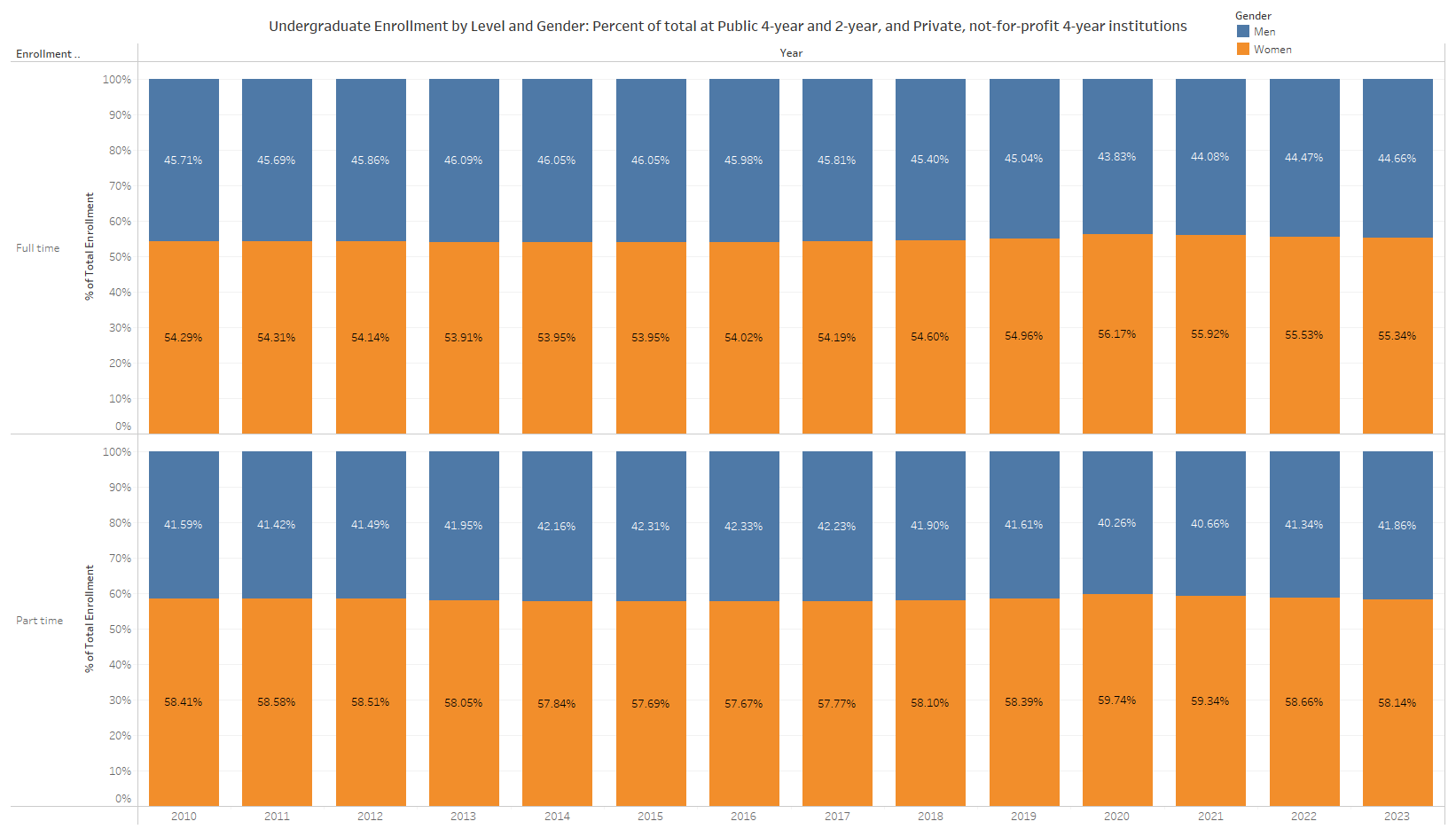
Here is the break out of gender balance going back to 2010. Shorter: If you walked around the average college campus ten years ago and today, you wouldn’t notice any difference.
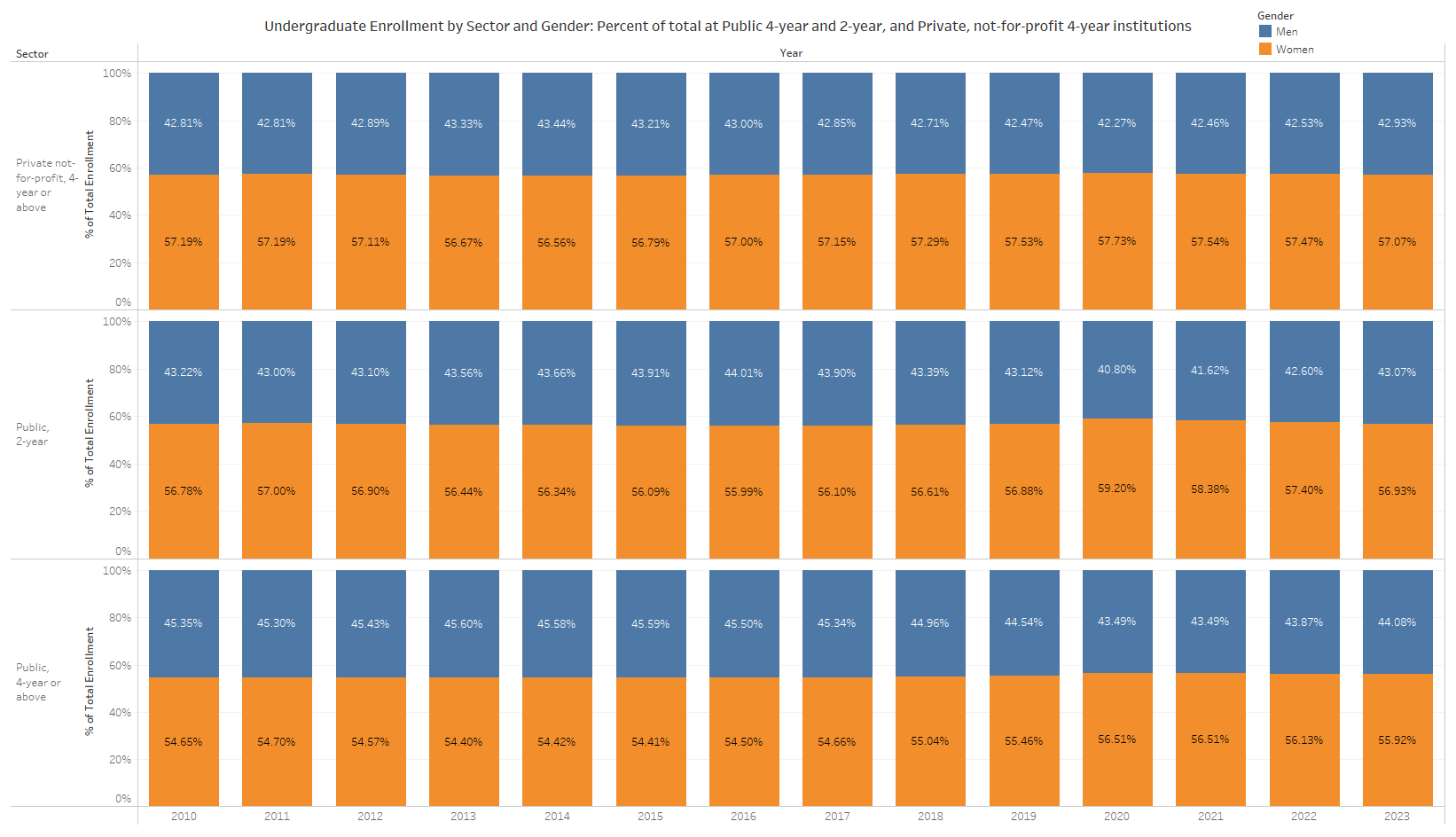
Here is the breakout by sector. Ditto:
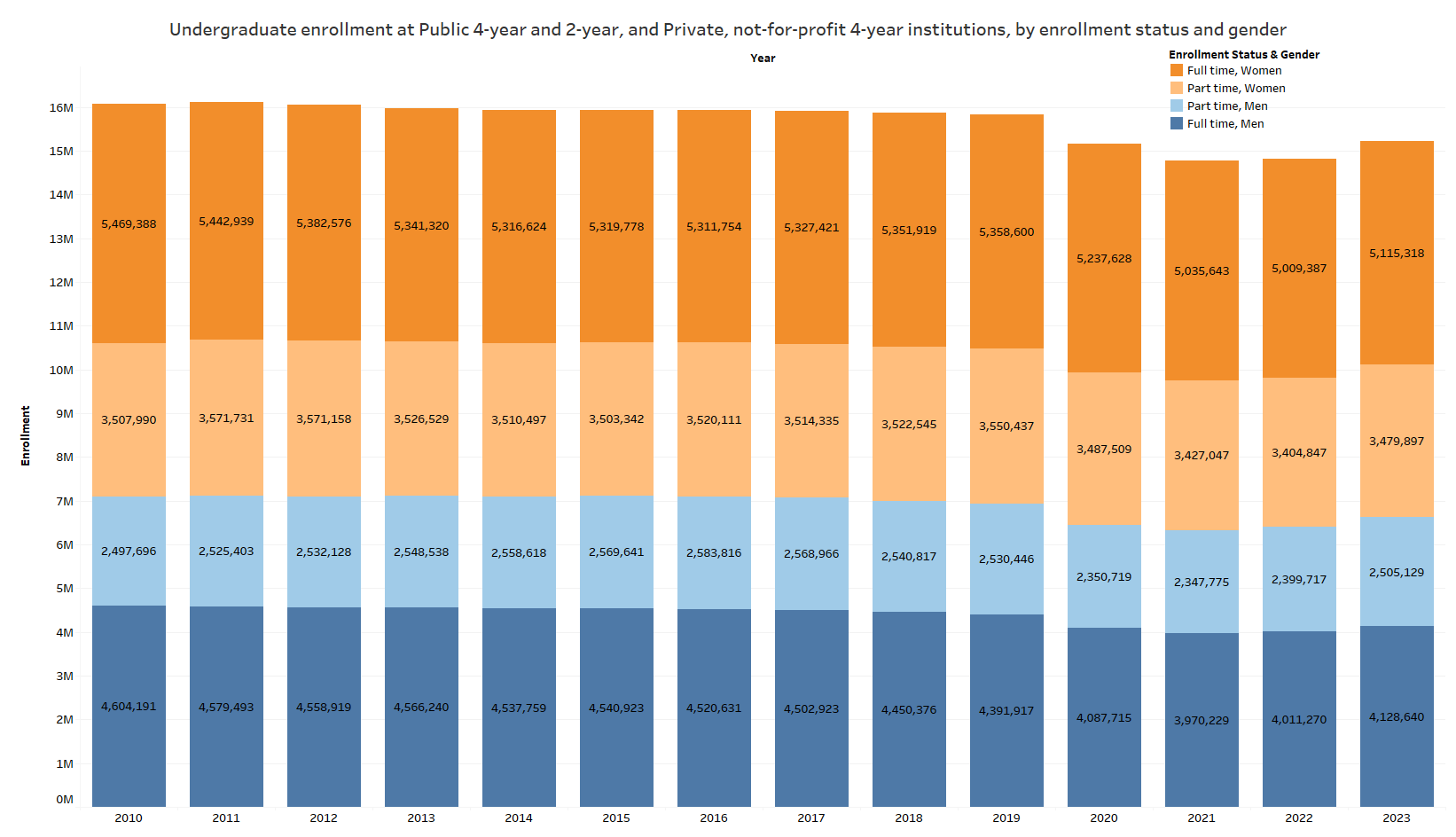
Here is the raw data at those three different sectors, broken out by gender and enrollment status. Don’t look at declines in one bar segment without looking at the others, lest you jump to hasty conclusions.
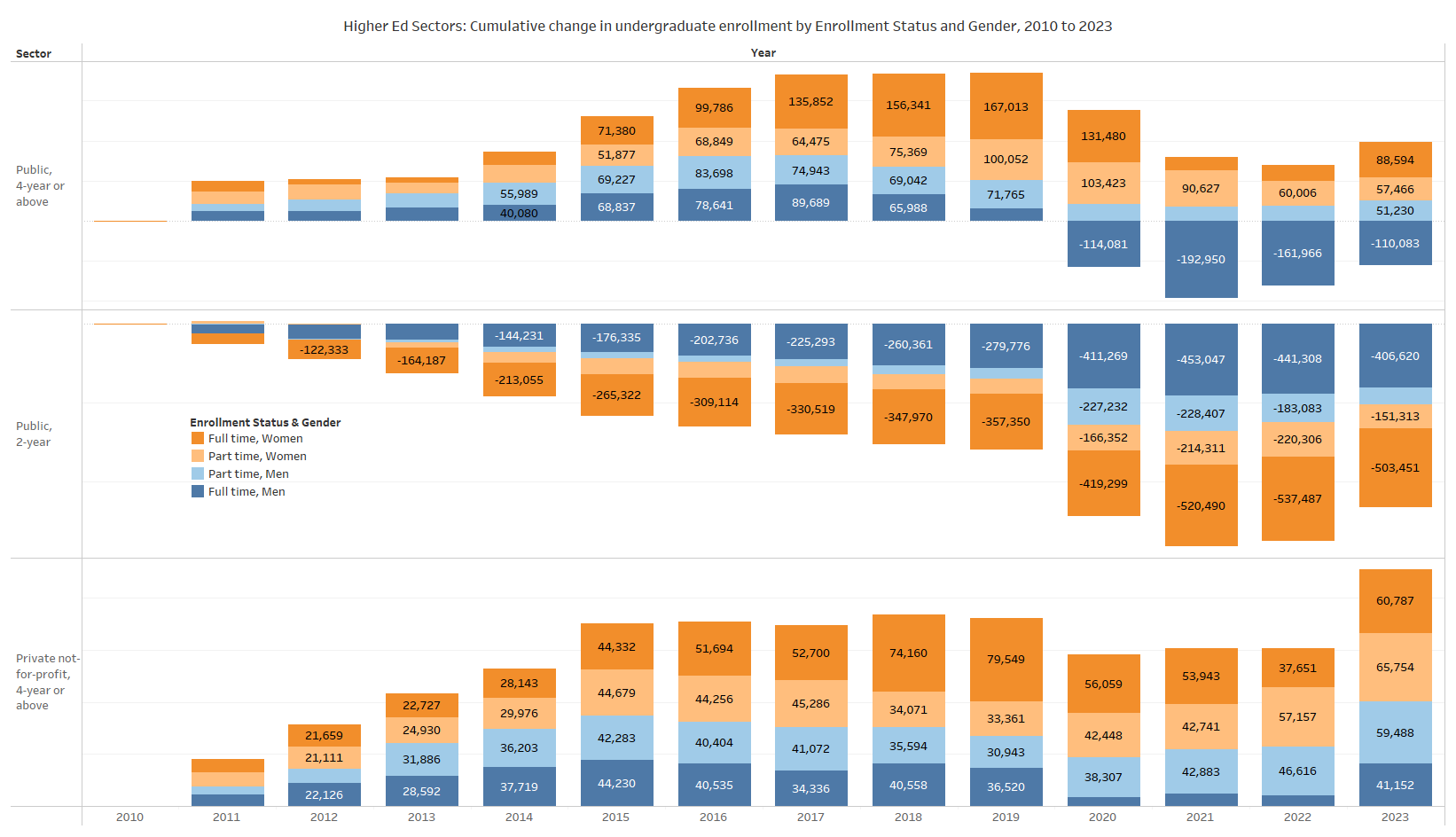
Here is the cumulative change since 2010. The length of the bar indicates the total change, with negatives below the zero-point on the y-axis. For instance, at two-year publics, the overall change has been negative, and the change in full-time women has been 503,000.
And finally, the year-over-year change. There appears to have been some catastrophic event of some sort between 2019 and 2020 that drove enrollment down. I’ll do some research on that and get back to you.
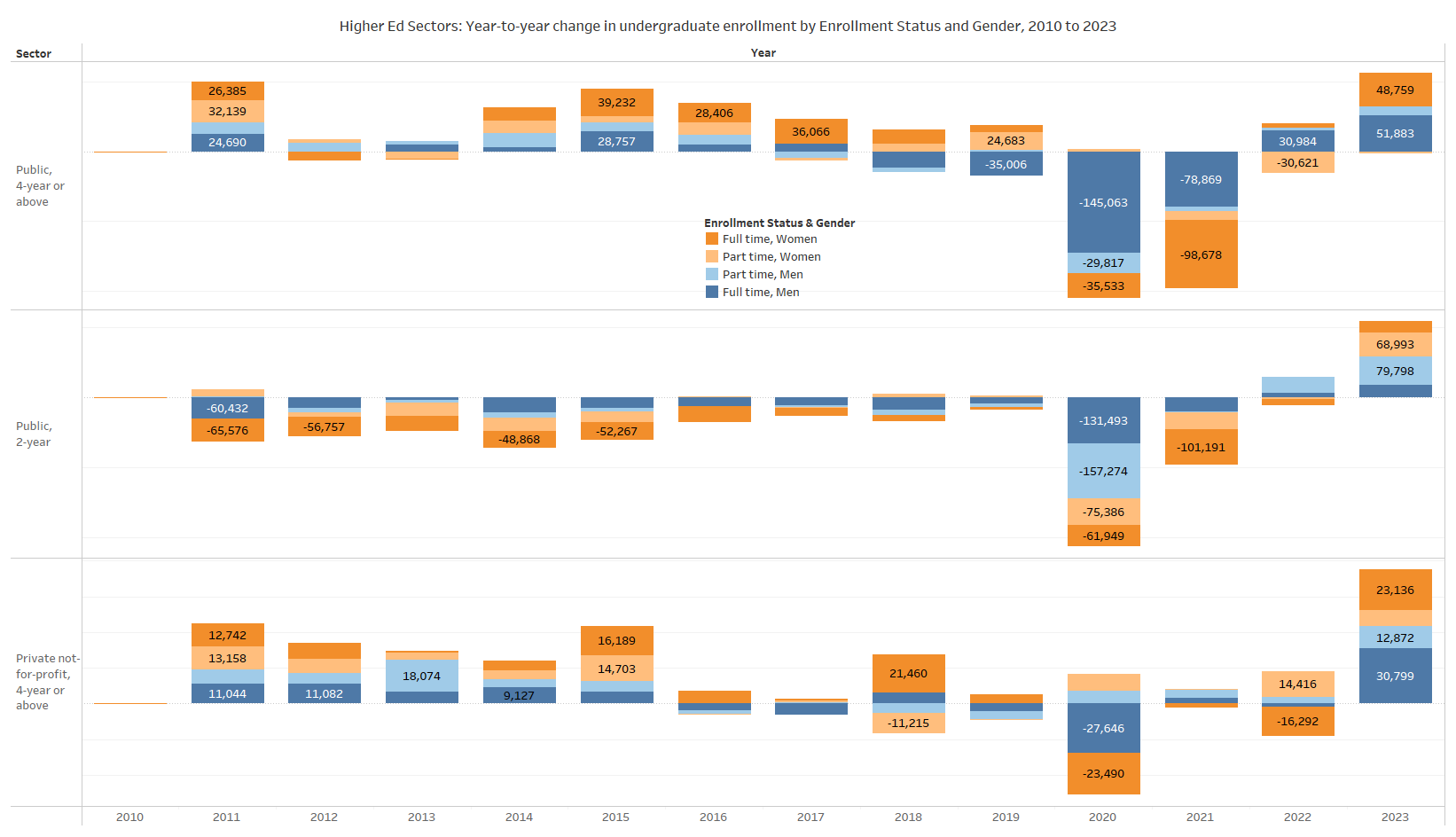
Note that, since the pandemic, enrollment of men has started–albeit slowly–to rebound, even at community colleges, the sector hardest hit.
Why is this important? You need to put your results against a national context (and it’s important here to note that if your college is in New England, the story looks different than if it’s in the Great Lakes states; if you’re at a Land Grant, Flagship, or Regional Public institution, your results will vary, too.) But don’t accept easy answers to your enrollment challenges, struggles, or (even) successes.
Context matters.
Discover more from Enrollment VP
Subscribe to get the latest posts sent to your email.
 Enrollment VP