
It’s a big question, and one many, if not most, colleges talk about and reflect upon regularly. And of course, recent Supreme Court decisions and changing political climates have made the issue even more difficult to navigate. What’s more, we measure diversity a lot of different ways, and ethnicity (the focus today) is only one of them.
Again, context is the first place you should begin this discussion. Here is the diversity of the American Higher Education System, including all undergraduates and all sectors. Click for a larger version of the image.
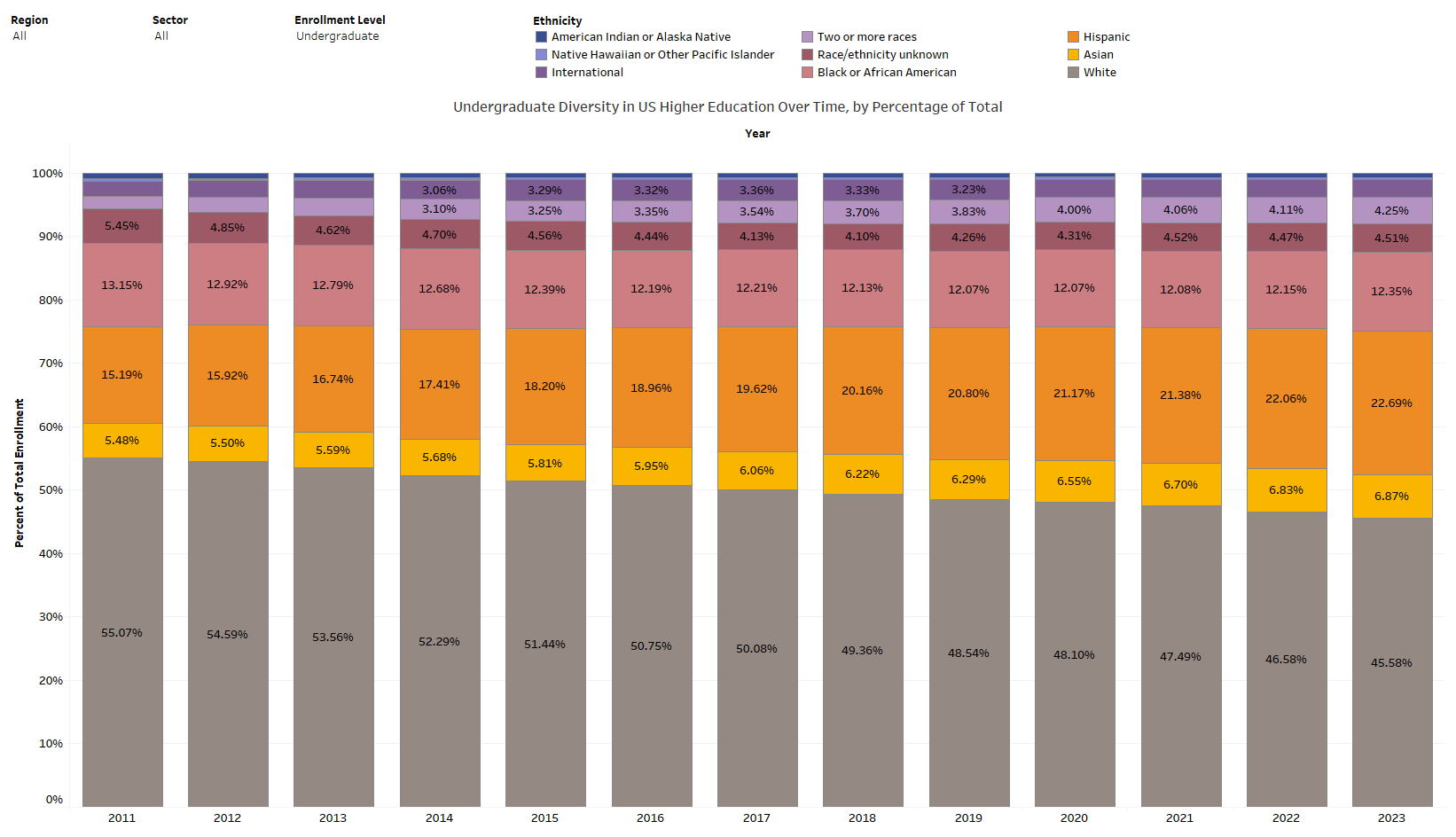
These changes, of course, are largely a function of the population diversity. But most enrollment is local or regional. Here’s one state in the south.
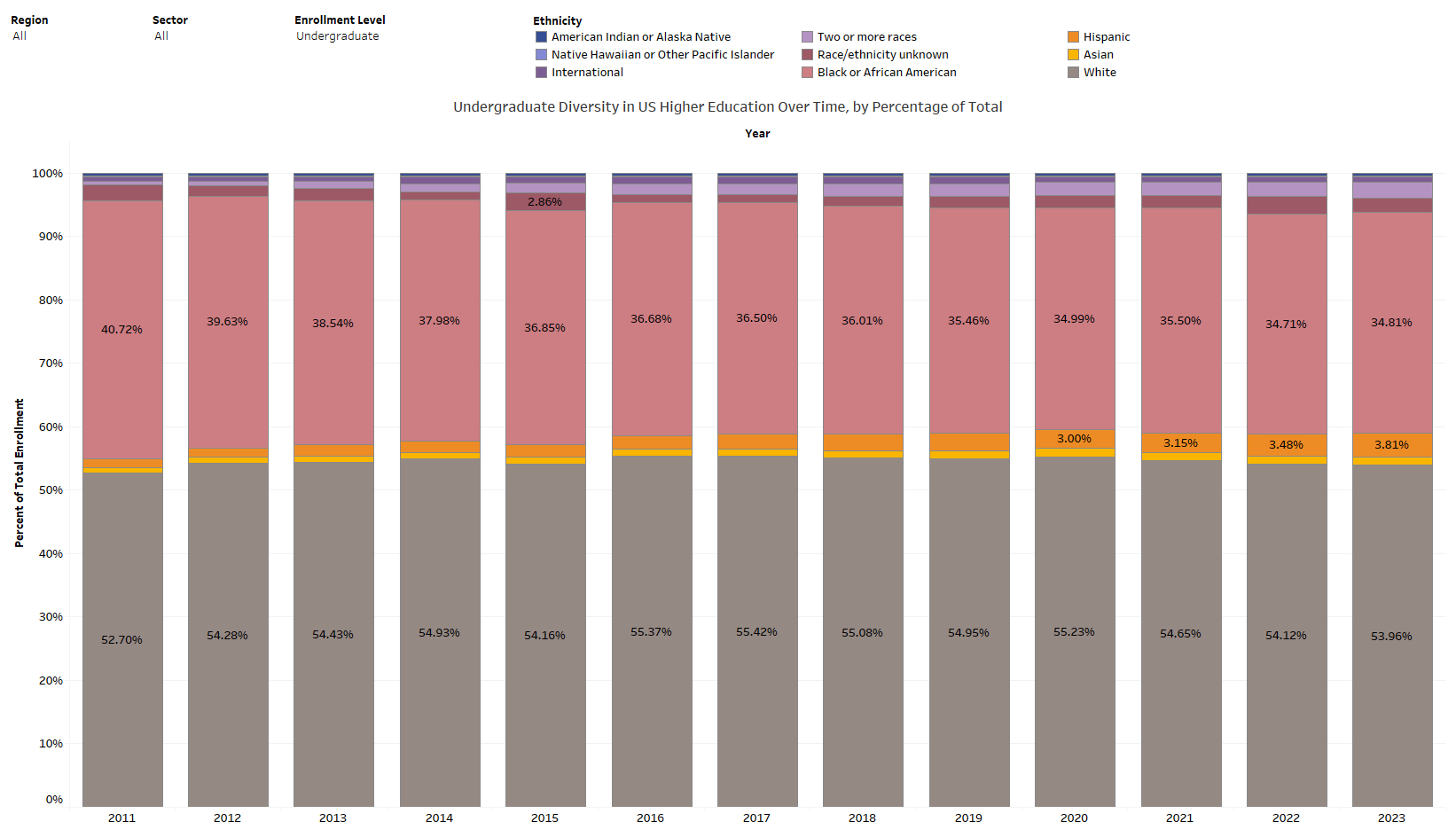
Here is one in New England.
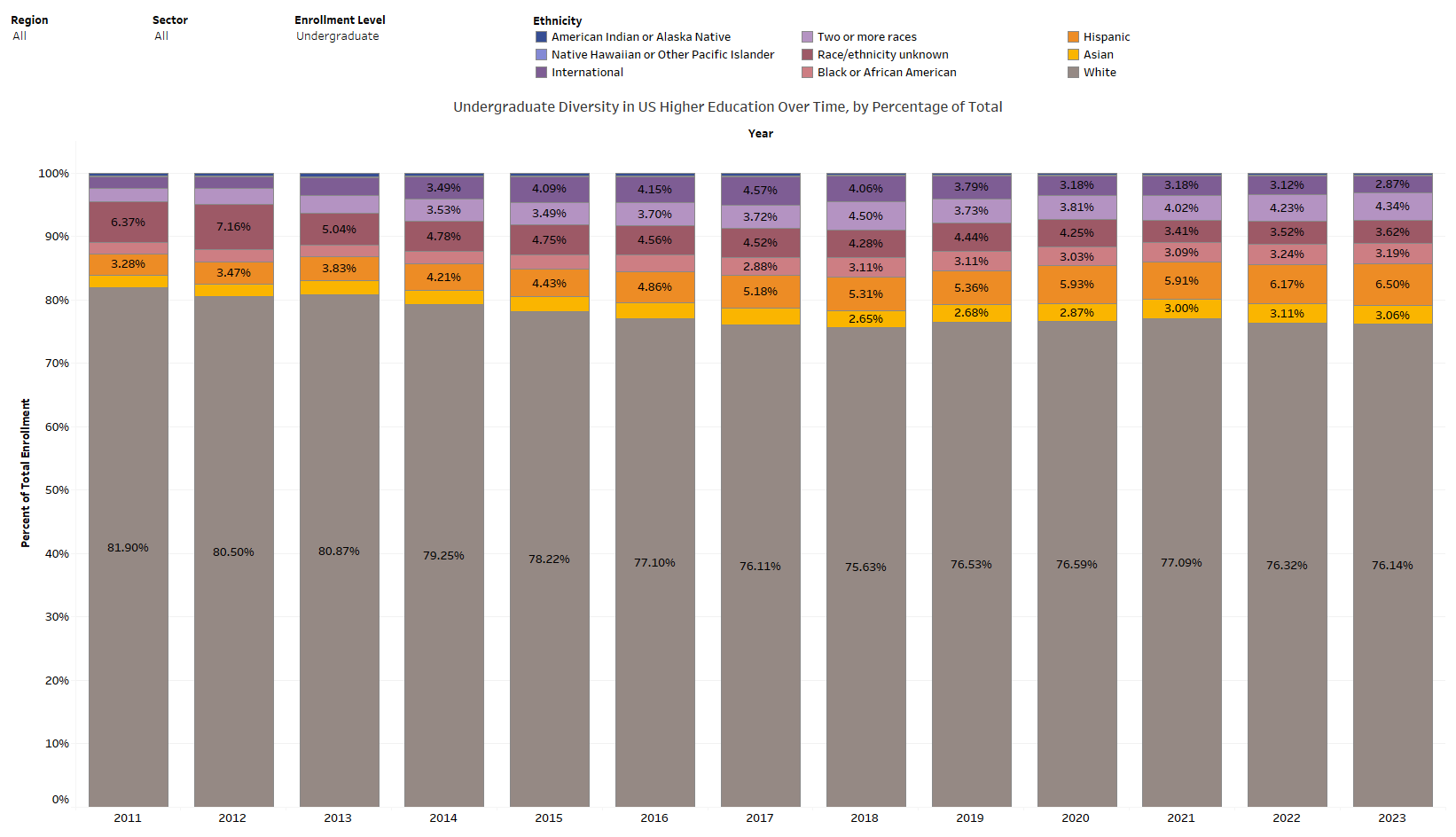
And here is one in the Southwest.
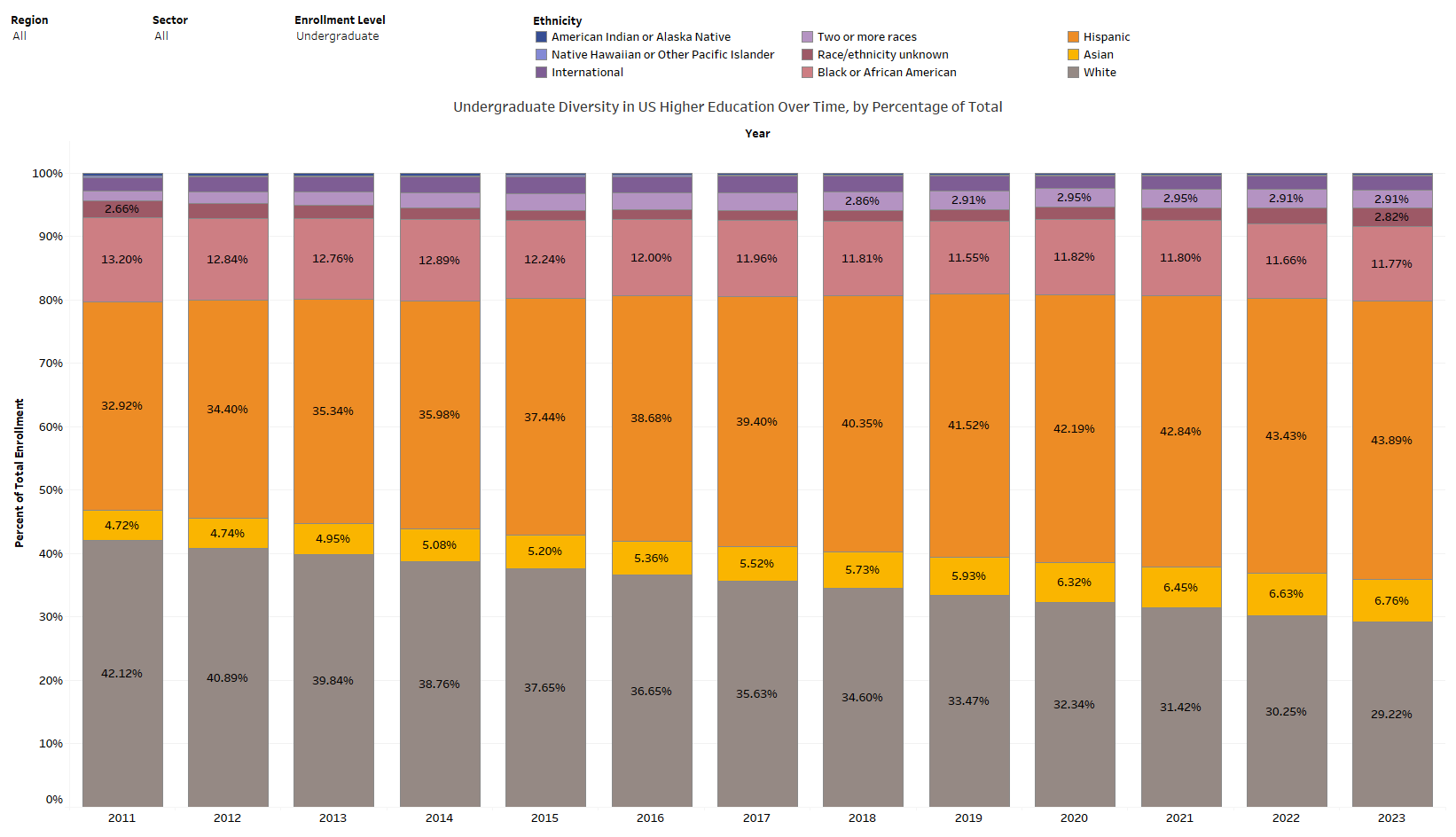
And here, in that same Southwestern state, are traditional liberal arts colleges.
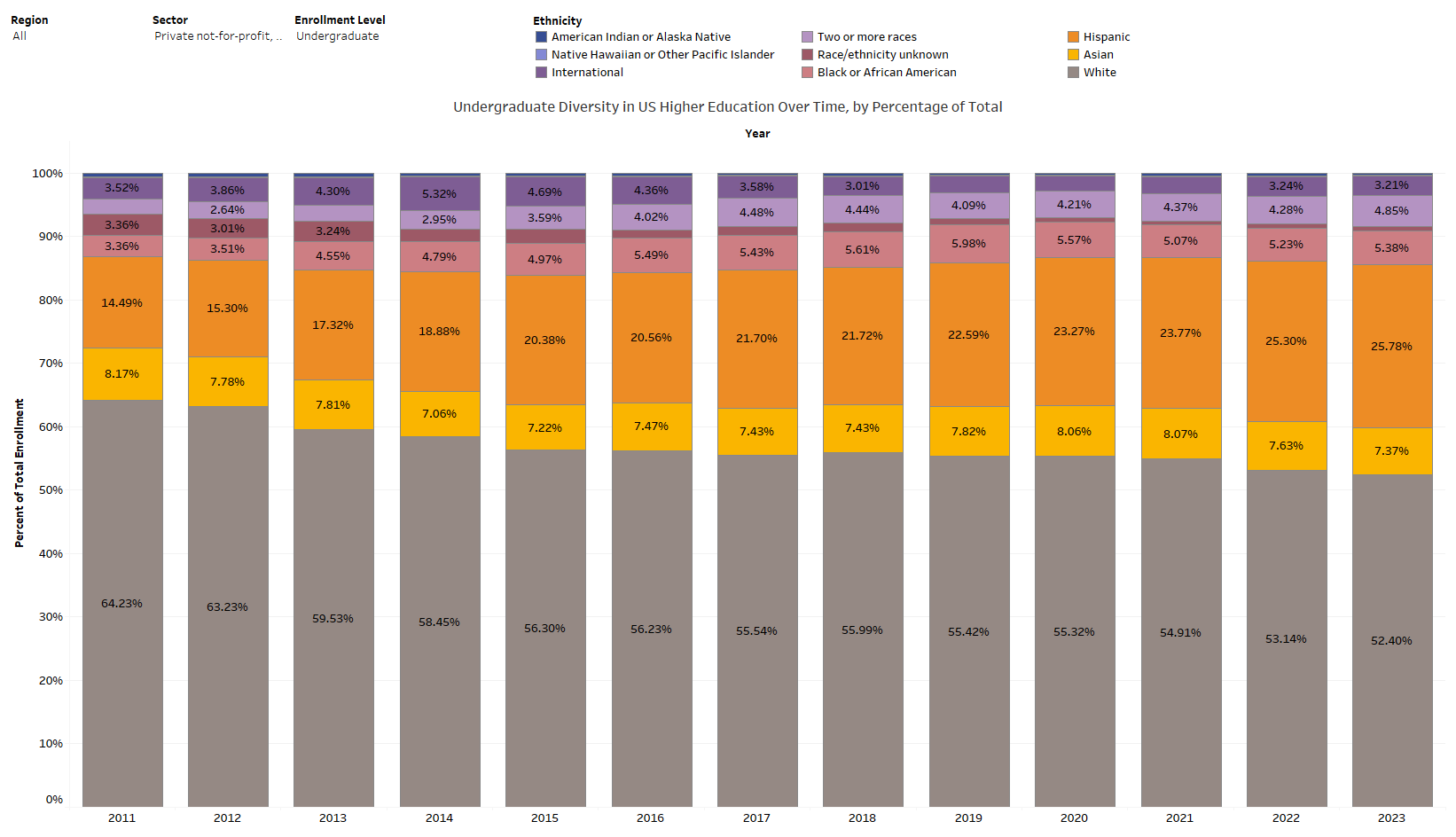
Complicating this discussion are population dynamics in America: Total diversity is fine as a metric, but diversity varies dramatically by age in the US, with older populations being more heavily skewed to White/Caucasian people. Although I’m not a lawyer, I’ve been told talking about “proportional representation” is likely to sound like a quota if you ever get sued.
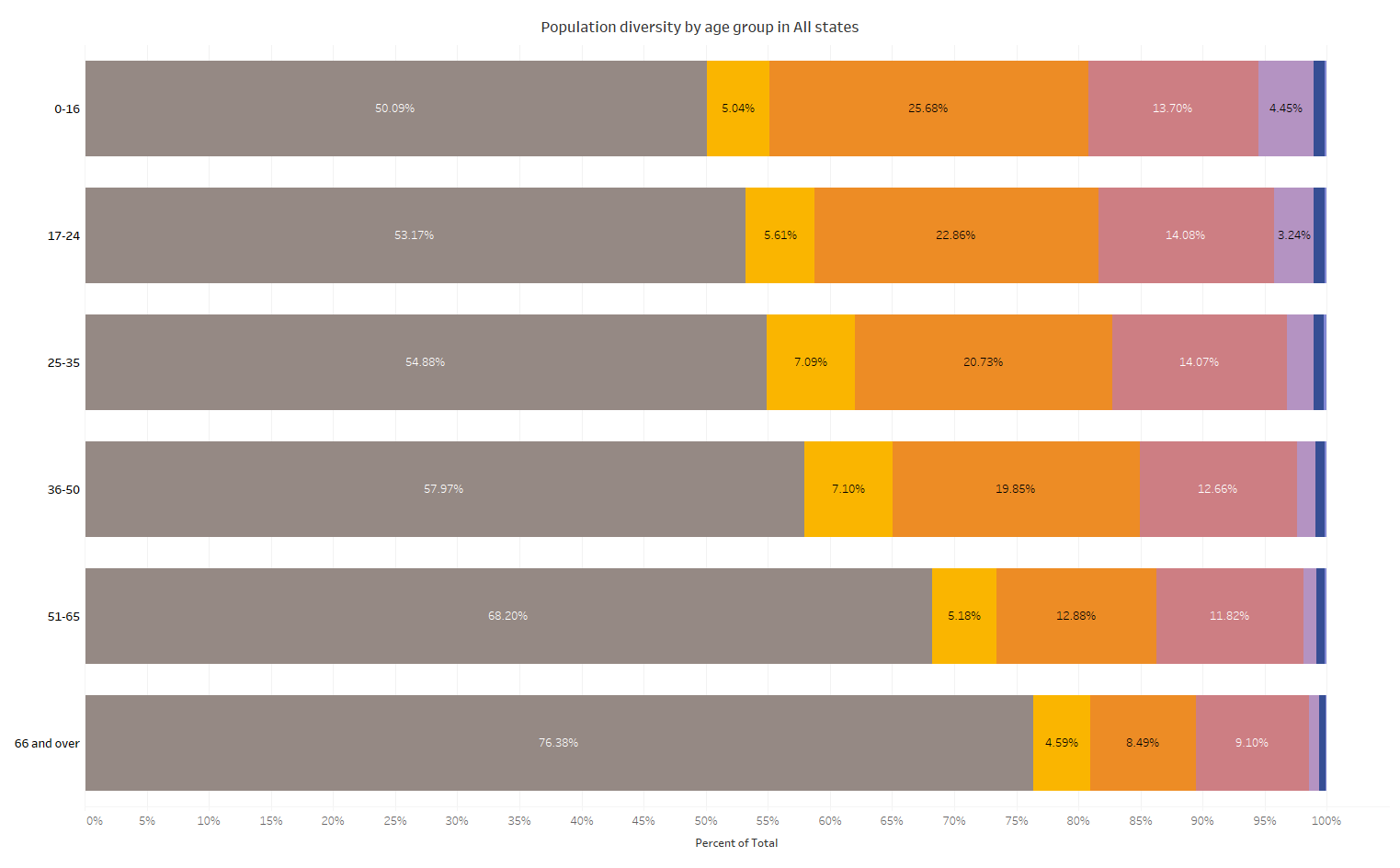
The lesson here, as it almost always is, is that enrollment is complicated, and you owe it to yourself to start from a foundation of solid information and commonly-agreed-to principles. Without both, you’re likely to find discussions about diversity more frustrating than helpful, creating more heat than light.
Discover more from Enrollment VP
Subscribe to get the latest posts sent to your email.
 Enrollment VP